

Description
Green Tomb
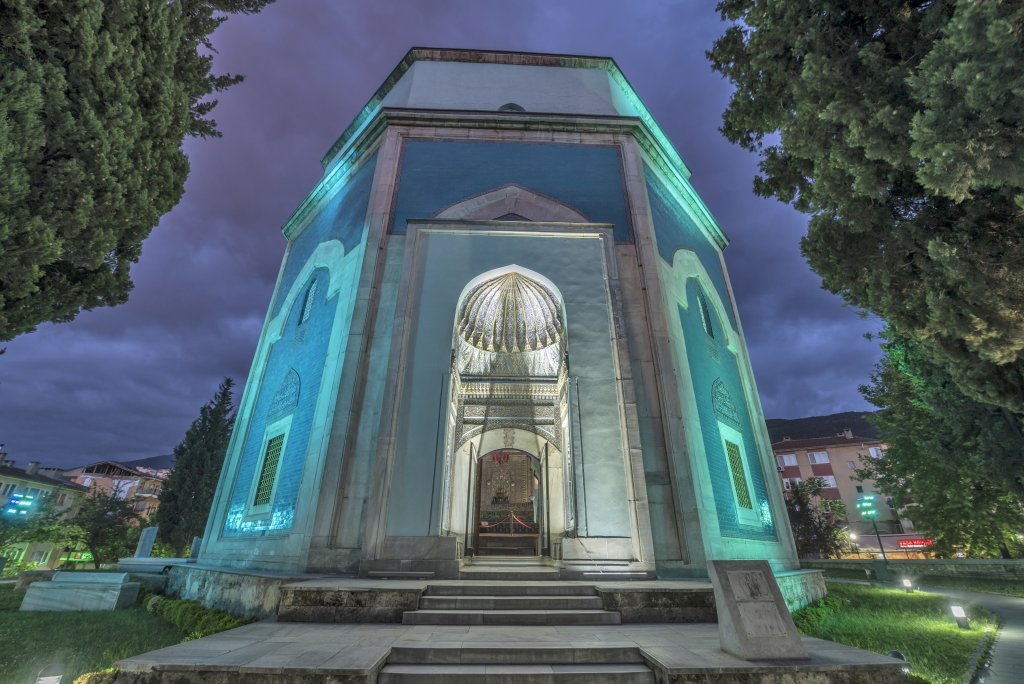
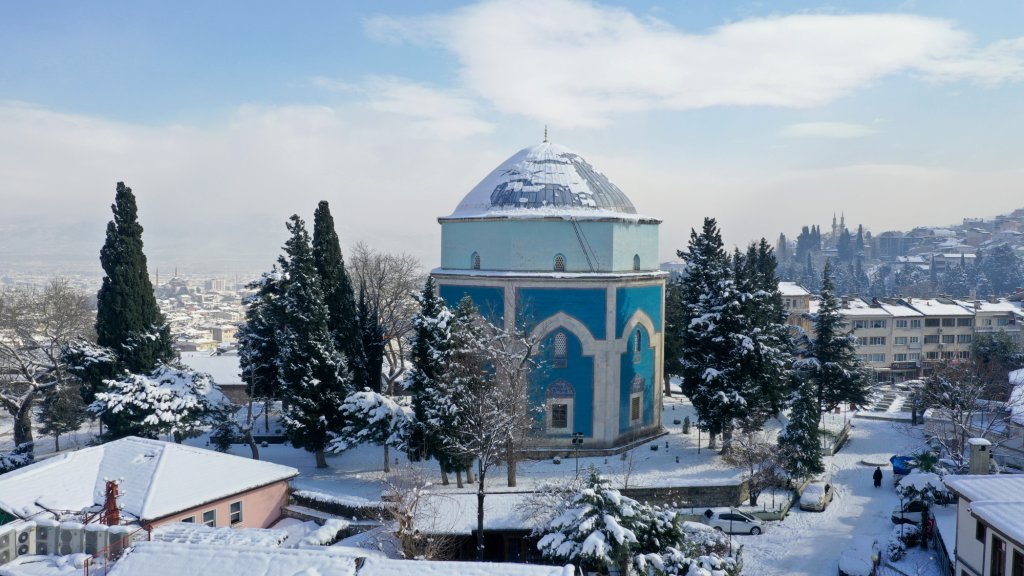
The tomb, which is the most well-known structure of the Yeşil Complex, was built by Çelebi Sultan Mehmed for Hacı İvaz Pasha in 1421. The tomb took its name "Green" from the blue, green and turquoise colored Iznik tiles, which are referred to in the literature as "Impossible Ceramics to Produce".
The tomb, which has a crypt (burial chamber) divided into five sections by walls, has an octagonal body. There are blue and white tiles and hadith inscriptions on the exterior facades and window pediments.
On its wooden door, which was created by the interlocking method (kurkenkâri) without the use of nails, there is the phrase "Amel-i Hacı Ali bin Ahmed-i Tebrizî" as the master of woodwork in the complex. In addition, his other masters are Nakkaş Ali bin İlyas Ali and Mehmed el Mecnun.
The interior walls of the building are covered with tiles up to a height of 3.00 meters. There are two windows on each body wall, one above or below the other, and one on the dome drum. Rectangular windows are surrounded by tile borders, and verses and hadiths are written on the pointed arch-shaped window pediments. There are "sunburst with salbek" motifs between the windows.
There are nine sarcophagi in the tomb. Çelebi Mehmed's sarcophagus and mihrab; It is covered with relief yellow, dark blue and white tiles. Other sarcophagi; It belongs to Çelebi Mehmed's princes Mustafa, Mahmud, Yusuf Çelebiler, his daughters Selçuk, Sittî, Ayşe, Hafsa Sultans and his wet nurse Dâye Hatun.
The tomb was restored between 2005-2009.
Adres
Bursa

Add a review