

Description
Green Mosque
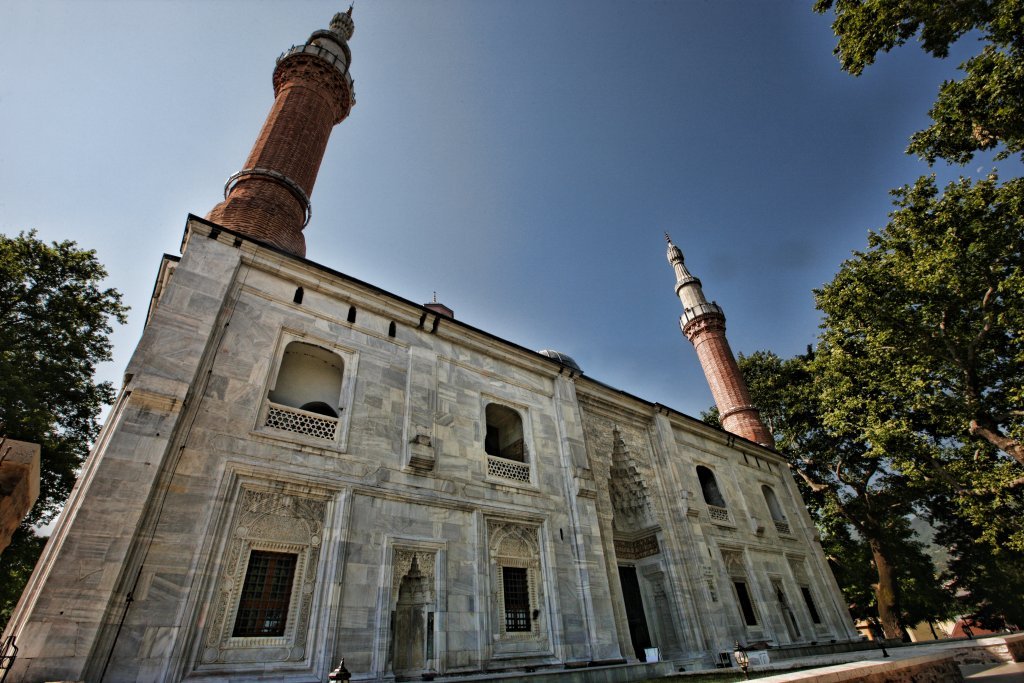
Green Mosque was built by Sultan Mehmed I (Çelebi) between 1419-1420, as stated in the three-line inscription in jali thuluth on the crown gate. The architect of the building is Hacı İvaz Pasha.
The mosque literally symbolizes the rebirth of the Ottoman Empire after the 11-year "Interregnum" following the defeat in the Ankara War in 1402.
The building, which is one of the mosques with a “⊥” plan (with tabhanes and lodges), has a symmetrical plan. There is no final congregation area in the mosque. From the arch stirrups seen on the entrance façade, it is understood that a five-bay narthex was designed. In historical sources, the reason why it could not be built is associated with the sudden death of Sultan Mehmed I. The mosque, which is entered through a magnificent crown gate, has cross-vaulted rooms (palace mahfils) on both sides of the lower floor of the entrance hall. The stairs to the right and left of the entrance hall lead to the upper floor, where the sultan's gallery and apartments are located. The entrance to the main place of worship, covered with two large domes, is provided through a passage corridor. The sections used as the muezzin's gallery, located on both sides of the passage corridor and covered with tiles, can be accessed from the central space. In addition, there are side iwans with segmented domes in the east-west direction of the central space and rooms adjacent to these iwans that can be entered through a door from the central space. There are plaster stoves and cabinets in the rooms covered with domes. The space where the mihrab niche and pulpit are located in the building is accessed by steps from the central space.
The Green Mosque is a work of flawless mastery with the inscription on its exterior, its windows decorated with geometric and floral motifs, its crown gate, and the harmony of the compositions of the hand-carved and tile-based decorations seen inside, and it is one of the rare examples with inscriptions bearing the names of the masters.
The mosque was restored by the General Directorate of Foundations between 2010 and 2012.
Adres
Bursa

Add a review