

Description
Iznik Koimesis Tes Theotokos Church
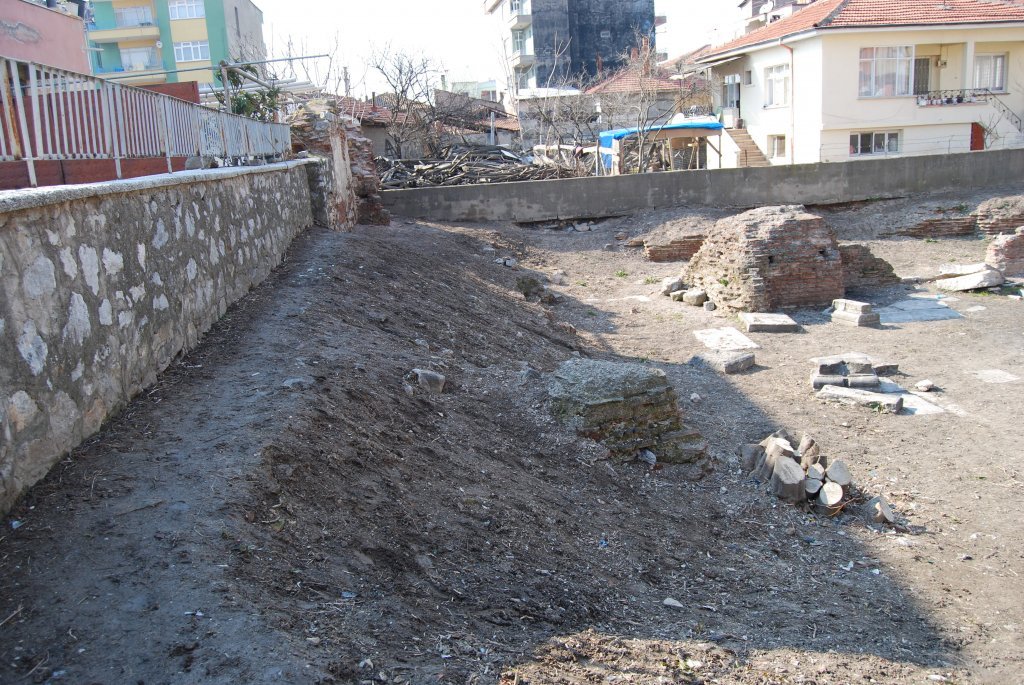
The building, only the ruins of which are observed today, was a temple that was actively used and standing in Iznik until the Greek occupation in 1922. The area where the church is located was a Christian neighborhood until the Republican period. Based on the plastic decorations found during the excavations in this area, it is thought that the church is one of the structures within the Hyakinthos Monastery.
The Koimesis Church was documented by travelers and researchers who visited Iznik before its destruction. The building has a ciborion planned church plan measuring 22.5x21 meters. Although the foundation ruins of the church are preserved today, its architectural features can be understood from the documentation studies carried out. There is a three-door entrance to the narthex section of the church from the west. This section is divided into three parts by two arches. The naos section and the side naves are accessed through a door. The naos section, which has a square space, is covered with a dome supported by four massive legs. An expansion of the naos was achieved with the short cross arms formed between the legs. A two-column, three-span arrangement was made between the naos and the side spaces. There is a transverse rectangular bema to the east of the naos. There are passages to the pastophoria rooms from here. The main apse with a seven-step synthranon is round from the inside and triangular from the outside. There is a window opening on each side. There are longitudinal rectangular side naves on both sides of the naos. The building has undergone various repairs and additions since the time it was built.
It is known that there are mosaics from four different periods in the interior of the church, based on documentation made before it was demolished. These; It was located in the apse semi-dome of the church, the bema arch, the narthex and the eastern feet of the naos. There was a mosaic of Mary and the Child Jesus in the semi-dome of the apse, Arche and Dynamis, depictions of angels, in the Bema arch, and a mosaic of Mary in proportion in the narthex and on the eastern legs of the naos.
Although there are different date suggestions in the evaluations made by researchers about the history of the church, the first construction phase dates back to the 6th-8th AD. It appears to be dated back to the 19th century.
Adres
Tarihi Merkez, Osmangazi/Bursa

Add a review