

Description
Istanbul Gate / Iznik
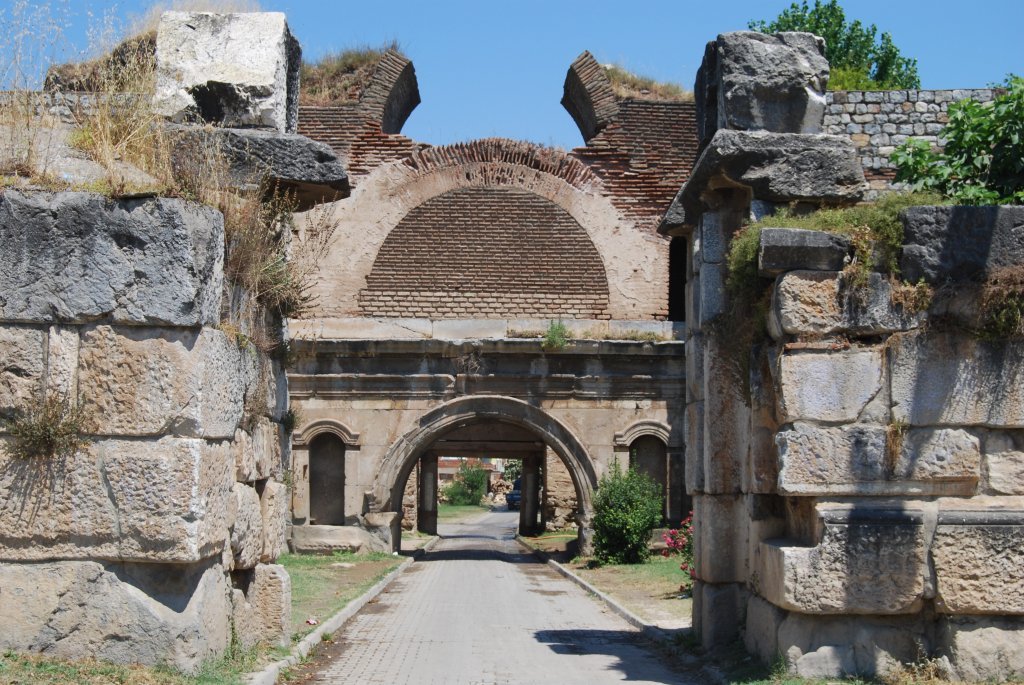
It is called Istanbul Gate because it is on the Istanbul road. This architectural complex, which forms the northern entrance of the city, has phases from different periods. The structure was originally in the form of an "Arc of Honor" built to show the honor and prestige of the city, rather than a structure belonging to defensive architecture. The architecture of Istanbul Gate is similar to the Lefke Gate, which is the eastern entrance of the city.
It was built by M. Plancius Varus, who served as governor of the Bithynia Province during the reigns of Vespasianus and Titus, who reigned in the Roman Empire in the second half of the 1st century AD, with the financial support of Gaius Cassius Khrestos of Nikaia. After the earthquake that occurred in 120 AD, the building was repaired and revived with the financial support of Emperor Hadrian. It is understood that the city did not turn to defensive architecture because it did not face any external threat until the 3rd century AD. The city, which was exposed to Goth invasion during this period, built a city wall for its defense needs. Thus, in the 3rd century AD, an entrance with two gates was created on the same axis at the northern entrance of the city, one connected to the city wall (the gate where the Arch of Honor is located) and the other on the city side.
Iznik (Nikaia) strengthened its defensive architecture by adding a second city wall in the 13th century to the front part of the city walls built in the 3rd century AD.
Adres
İznik West Entrance, İznik/Bursa

Add a review